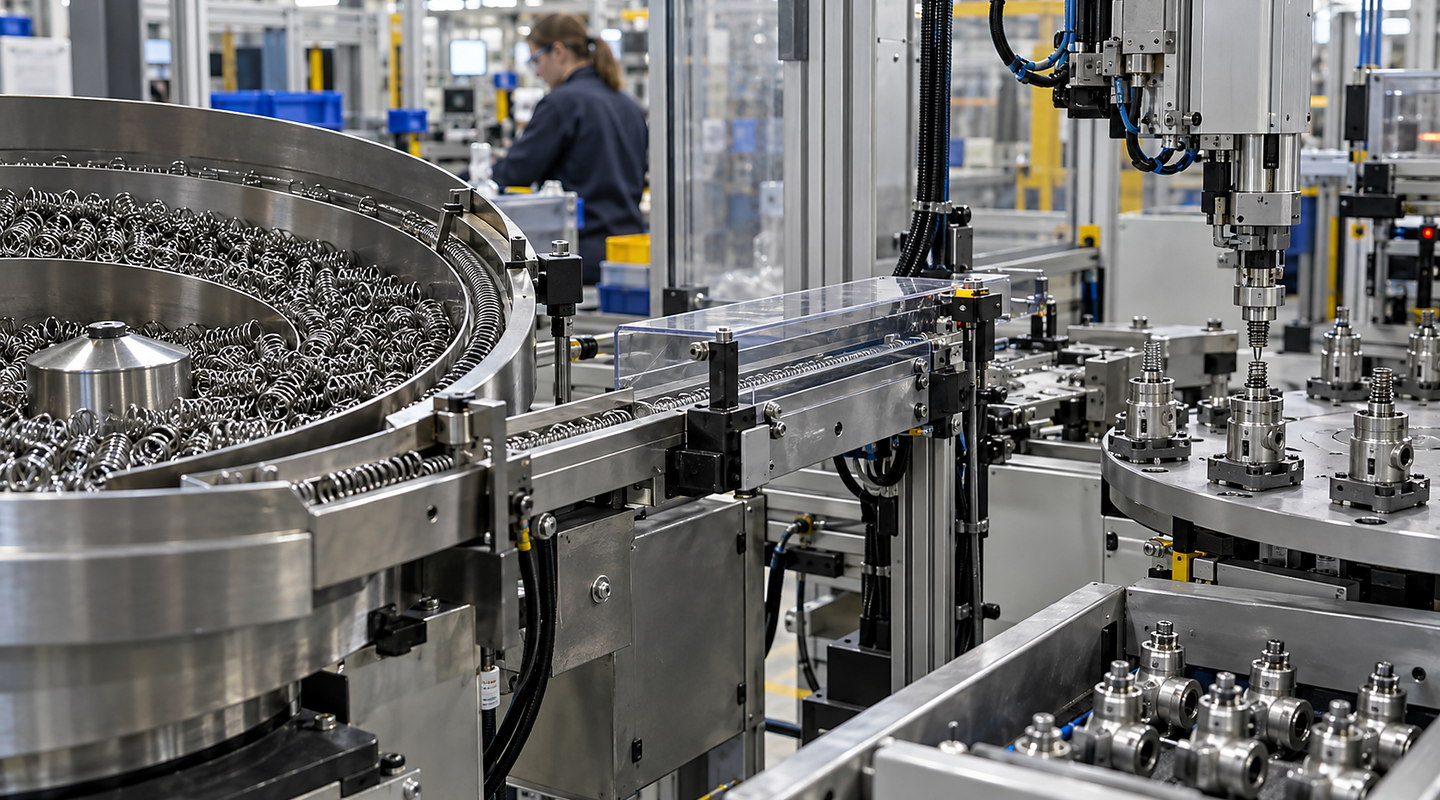
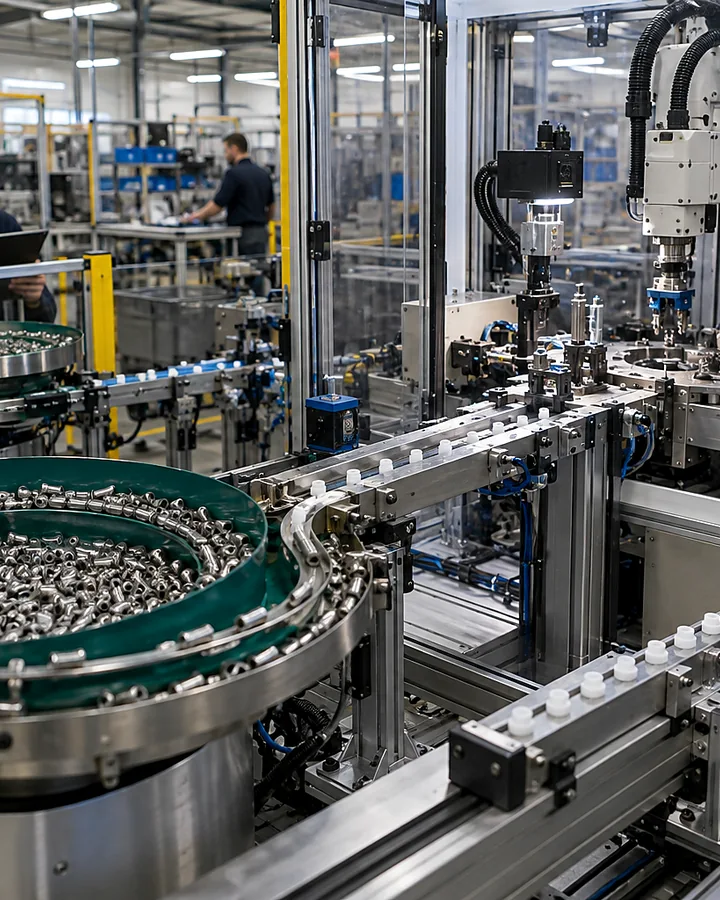
Magnet feeding systems separate and present magnetic components for a defined downstream operation. The brief must describe how magnets arrive, which face or polarity is required and how one part is confirmed at pickup. Prove separation with real clusters and the intended tooling environment.
Speak directly with Sorting Solutions about magnetic-component separation and feeding.
Quick answer
How do we separate and present magnetic components consistently?
Specify the magnet geometry, magnetic orientation and the bulk condition in which parts arrive. Identify permitted contact surfaces and the required final polarity or face orientation. Trial separation and transfer with realistic clusters, and agree how the system detects and recovers from multiple parts or an incorrect presentation.
Application decisions
Resolve magnetic-part behaviour before selecting a feeder
A magnet’s dimensions do not describe its full feeding behaviour. Include the magnetic state and the way parts interact in storage and transfer.
Decision 1
What magnetic condition reaches the feeder?
State whether parts arrive magnetised, their required orientation and how the supplier packs them. Keep this information tied to the part revision. A proposed method should be assessed with that actual supply condition, not with visually similar unmagnetised pieces.
Decision 2
How are clusters or stacks separated?
Provide typical groups as they arrive in production. Trial the separation sequence and record multiple parts, recirculation and interventions. Explain whether controlled stacks, trays or bulk loading are acceptable so a practical presentation route can be compared.
Decision 3
Which face or polarity must be delivered?
Distinguish geometric orientation from magnetic orientation. Define the required final condition and how it will be verified. A correctly shaped part in the right physical position may still need a separate polarity decision before assembly.
Decision 4
What contact and damage are acceptable?
Identify coated surfaces, edges and appearance requirements. Inspect parts after repeated handling, including the separator and pickup interface. Keep damaged samples and the agreed acceptance decision so the trial does not count every delivered piece as usable.
Decision 5
How will the magnet transfer to the process?
Show the receiving gripper or nest and neighbouring metal components. Trial release as well as pickup with the intended gap and orientation. Confirm that the part remains where the next operation expects it after the feeder releases control.
Decision 6
What happens after a double or failed presentation?
Agree how an uncertain part is contained, how the next part is prevented from advancing and how the system returns to a known state. Include access and recovery in the project assessment rather than relying on repeated manual separation during production.
Applications
Two useful starting points for magnet feeding systems
The right choice changes with component geometry and variation for magnetic-component separation & feeding, surface, fragility and entanglement behaviour, your line layout and required results.
Use production magnets in their real packaging and magnetic state. Record accepted singles at the hand-off, wrong orientation, multiple parts, surface damage and interventions. Challenge changes in bulk level and the most difficult normal clusters. If the final polarity is important, include its verification in the acceptance record rather than inferring it from the feeder’s mechanical orientation.
Sample trials must include normal, marginal and supplier-variant components.
Quoted feeder output is not the same as usable delivery at the downstream process.
Fragile, flexible, magnetic or entangling parts may need a different presentation method.
Your final solution for magnetic-component separation and feeding must reflect the law, current standards and site-specific risks that apply to your installation.
Diagnose magnetic-part feeding with the original supply condition
If a magnet feeder behaves differently after a refill or part change, keep the incoming presentation in the investigation. A tray of separated magnets and a box of attached stacks are different handling duties even when the drawing is unchanged.