Information and training
Provide current operating, maintenance and safety information for Magnet Feeding Systems, plus settings, software backups, training and any outstanding actions.
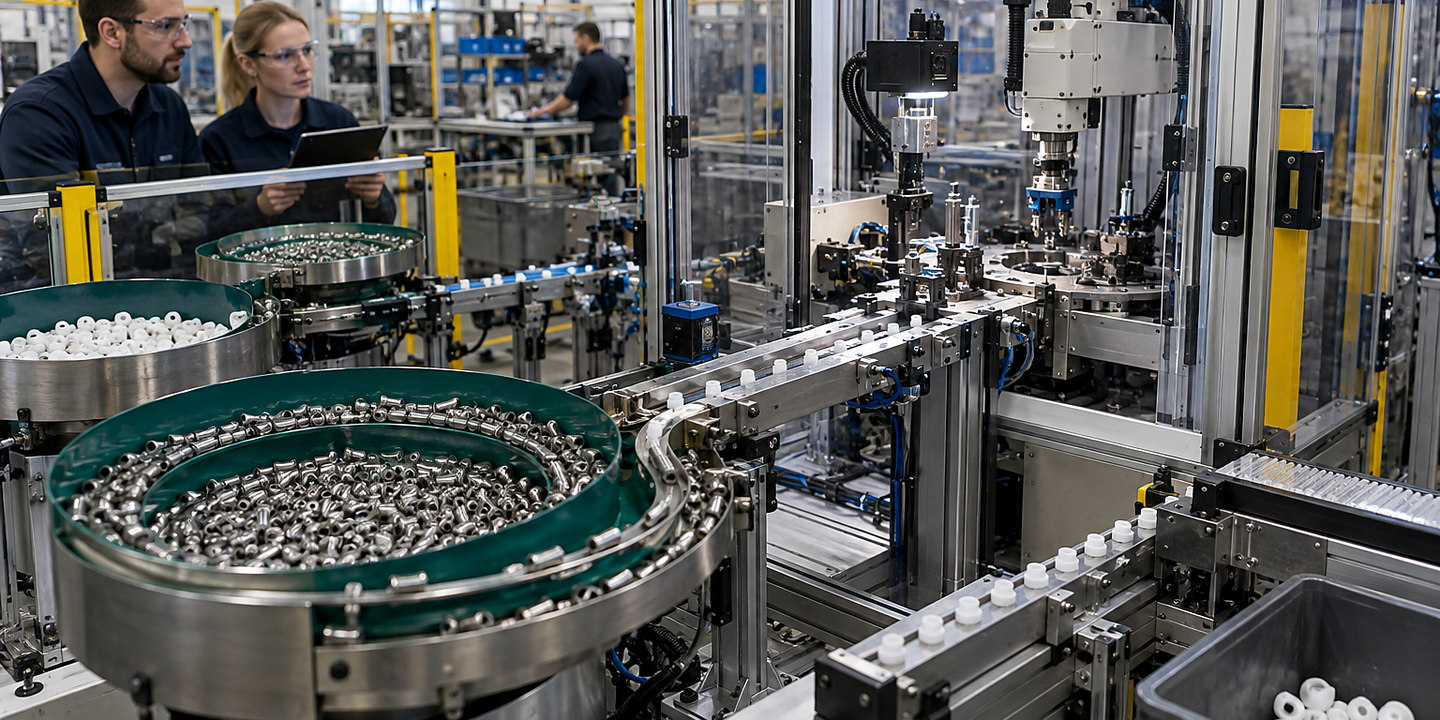
Plan documentation, training, spares, maintenance and change control for magnet feeding systems.
Reliable support for magnet feeding systems starts with safe access, clear diagnostics, controlled settings, maintainable parts and information your team can use.
Your support plan should match the people responsible for bulk presentation using magnetic-component separation and feeding, the production risk and the response your site needs.
Plan magnet feeding systems around real component variation, bulk condition, orientation, usable delivery rate and the downstream interface. Discuss representative part trials with Sorting Solutions. Plan the information, access and response needed to keep your operation running safely and consistently.
Discuss your application

Provide current operating, maintenance and safety information for Magnet Feeding Systems, plus settings, software backups, training and any outstanding actions.
Set inspection, cleaning, calibration where applicable and wear-part tasks around escapement and downstream pick interface.
Give the people responsible for bulk presentation using magnetic-component separation and feeding clear fault information, safe diagnostic access, escalation routes and a controlled restart.
Review new products, parts, software, materials or rates before altering settings that affect jam, damage and recovery acceptance checks.
Record the current operating state, active recipe, recent material or variant change and the condition of component geometry and variation for magnetic-component separation & feeding.
Use the approved isolation or intervention method for bulk presentation using magnetic-component separation and feeding; never defeat a safeguard or force an output to shorten diagnosis.
Use the documented recovery sequence for Magnet Feeding Systems, confirm the first accepted output and retain the fault and action record for trend review.
A new variant or higher rate can alter component geometry and variation for magnetic-component separation & feeding, surface, fragility and entanglement behaviour, bulk condition and replenishment method, required orientation and delivery rate, escapement and downstream pick interface, and jam, damage and recovery acceptance checks. Record the change, assess consequences and repeat the relevant trial or validation rather than assuming the previous result transfers.
If a magnet feeder behaves differently after a refill or part change, keep the incoming presentation in the investigation. A tray of separated magnets and a box of attached stacks are different handling duties even when the drawing is unchanged.
Keep the part identifier, magnet orientation, supplier batch and packaging method with the fault record. Describe whether the problem begins at bulk separation, transport or pickup. A photograph of the final jam alone may omit the attached cluster that entered the route earlier.
These are separate acceptance questions. A present component may be doubled, reversed or presented with the wrong magnetic orientation. Specify which checks are actually required by the next operation and retain representative examples for each outcome. Do not claim that a simple visual presence check establishes every one of them.
Compare the tool and track condition with the accepted configuration, using the approved safe maintenance method. Note accumulated debris, contact damage and changes in surrounding fixtures or fasteners. Changes intended to make separation easier should be reviewed for their effect on the component surface and downstream process.
After approved maintenance or a format change, include the incoming arrangements that previously caused uncertainty. Record single-part pickup, orientation and the response to an unseparated cluster. Keep the configuration and sample identifiers so the result can be compared with the next production batch.