Current condition
Identify magnet revision/geometry, supplied magnetic state and packaging, realistic clusters/stacks/trays and permitted contact surfaces. Record required face or polarity and the actual receiving-tool/nearby-material arrangement.
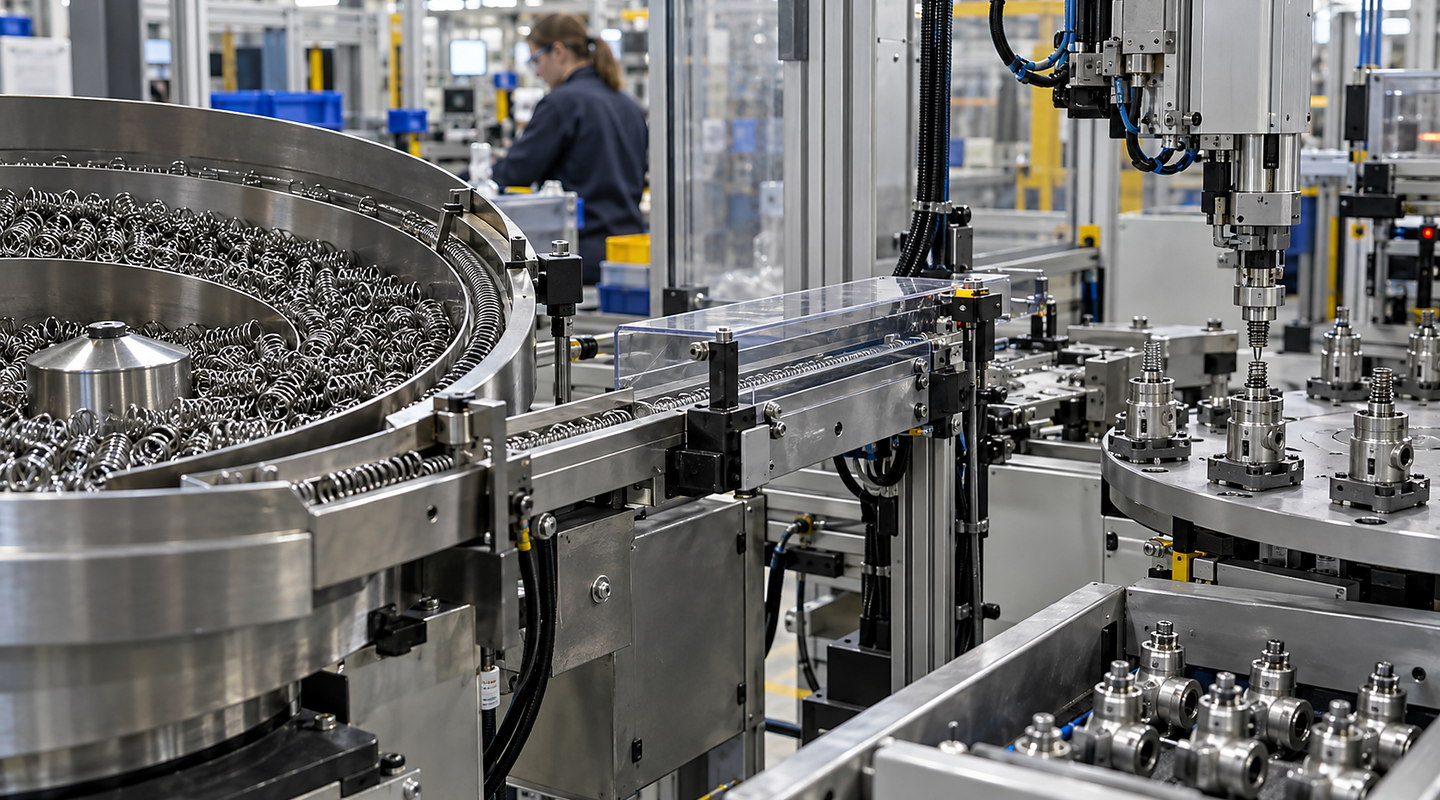
Agree magnet-feeder acceptance using real supply conditions, accepted singles at handoff, required orientation/polarity, damage checks, pickup/release and recovery evidence.
Agree production magnet samples, supplied magnetic state, normal clusters and final presentation before testing. Retain accepted singles at the actual receiving tool, multiple or incorrectly presented parts, required polarity decisions and damage results. Include pickup and release, bulk-level changes, refill and the defined containment/recovery response.
Link the identified parts and tooling conditions to the complete feeding sequence. Inspect parts after repeated handling and retain the damage acceptance decision. Quoted feeder output is not the same as usable delivery, and mechanical position alone does not prove polarity.
Plan magnet feeding systems around real component variation, bulk condition, orientation, usable delivery rate and the downstream interface. Discuss representative part trials with Sorting Solutions. Use this guide to resolve jam, damage and recovery acceptance checks before it limits the final system.
Discuss your application

Identify magnet revision/geometry, supplied magnetic state and packaging, realistic clusters/stacks/trays and permitted contact surfaces. Record required face or polarity and the actual receiving-tool/nearby-material arrangement.
Include normal clusters, supplier/part variation, bulk-level changes, refill and part changes, plus cosmetic or edge limits. State the incoming conditions, tooling or required polarity decisions that remain outside the trial.
Observe singulation, recirculation, multiple parts, orientation and any required polarity verification, then pickup/release at handoff. Retain accepted singles, damage decisions, interventions and the agreed uncertain-part containment and recovery results.
For Magnet Feeding Systems Rate and recovery checklist, describe the current position, required outcome, acceptable limits and known exceptions for component geometry and variation for magnetic-component separation & feeding. That lets us compare options against your real production rather than one nominal value.
For Magnet Feeding Systems Rate and recovery checklist, describe the current position, required outcome, acceptable limits and known exceptions for surface, fragility and entanglement behaviour. That lets us compare options against your real production rather than one nominal value.
For Magnet Feeding Systems Rate and recovery checklist, describe the current position, required outcome, acceptable limits and known exceptions for bulk condition and replenishment method. That lets us compare options against your real production rather than one nominal value.
For Magnet Feeding Systems Rate and recovery checklist, describe the current position, required outcome, acceptable limits and known exceptions for required orientation and delivery rate. That lets us compare options against your real production rather than one nominal value.
For Magnet Feeding Systems Rate and recovery checklist, describe the current position, required outcome, acceptable limits and known exceptions for escapement and downstream pick interface. That lets us compare options against your real production rather than one nominal value.
For Magnet Feeding Systems Rate and recovery checklist, describe the current position, required outcome, acceptable limits and known exceptions for jam, damage and recovery acceptance checks. That lets us compare options against your real production rather than one nominal value.